


Caracteres Chineses Facilitados
Caracteres Chineses Facilitados
Caracteres chineses parecem desenhos impossivelmente complexos para iniciantes. Não há alfabeto para decifrar, nem atalhos fonéticos — cada caractere é uma unidade visual única que você precisa memorizar individualmente. Você precisa de cerca de 2.000 caracteres para alfabetização básica, e a sensação de esquecer caracteres que aprendeu na semana passada é uma das partes mais frustrantes de estudar mandarim.
Mas aqui está o que ninguém te diz: personagens não são aleatórios. Eles são construídos a partir de um conjunto finito de componentes — como tijolos LEGO — e, uma vez que você aprende a ver os padrões, a memorização fica muito mais fácil. Os aprendizes que têm sucesso não são os que têm memória fotográfica. São eles que têm um sistema. Este guia aborda cinco métodos comprovados para memorizar caracteres chineses, desde quebras radicais até repetição espaçada e aquisição baseada na leitura. Escolha a combinação que funcionar para o seu estilo de aprendizado.
Para o roteiro completo de aprendizado de mandarim — incluindo como os caracteres se encaixam no seu plano geral de estudos — veja nosso guia completo para aprender mandarim.
Entendendo a Estrutura do Caráter
Antes de memorizar personagens de forma eficiente, precisa entender como eles são construídos. Cada caractere chinês é composto por unidades menores chamadas radicais e componentes.
Radicais são os blocos semânticos de construção. Eles te dão uma pista sobre o significado do personagem. O radical 氵 (radical da água) aparece em caracteres relacionados à água: 河 (hé, rio), 湖 (hú, lago), 洗 (xǐ, lavar), 泳 (yǒng, nadar). O radical 口 (boca) aparece em caracteres relacionados à boca: 吃 (chī, comer), 喝 (hē, beber), 叫 (jiào, chamar), 唱 (chàng, cantar). Aprender os 50 radicais mais comuns te dá um sistema de decodificação para milhares de caracteres.
Componentes fonéticos dão pistas sobre a pronúncia. O caractere 清 (qīng, claro) contém o radical da água 氵 (para significado) e 青 (qīng) como uma dica fonética — ambos são pronunciados "qīng". De forma semelhante, 请 (qǐng, por favor), 情 (qíng, sentir) e 晴 (qíng, ensolarado) compartilham 青 como componente fonético. Todos soam parecidos, mesmo que seus significados sejam diferentes.
Padrões de composição. Os personagens seguem regras estruturais. Os layouts mais comuns são:
- Esquerda-direita: 你 (nǐ, you) — 亻+ 尔. A maioria dos personagens segue esse padrão.
- De cima a baixo: 花 (huā, flor) — 艹 + 化.
- Recinto: 国 (guó, país) — 囗 + 玉. O radical externo envolve o componente interno.
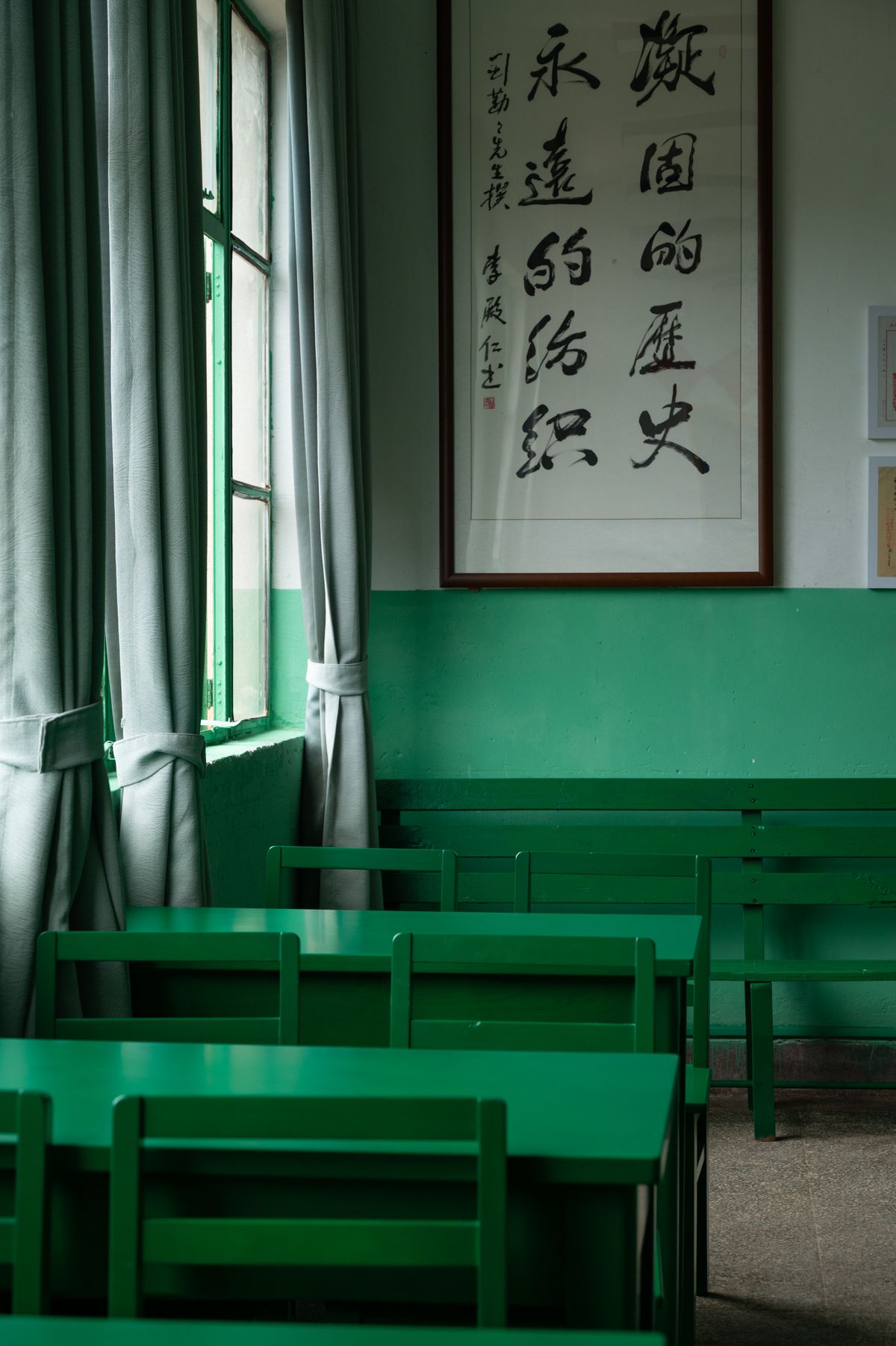
Compreender a estrutura dos caracteres transforma a memorização de força bruta em reconhecimento de padrões. Você não está decorando 2.000 imagens aleatórias — está aprendendo a montar e desmontar um sistema.
Método 1: "Lembrando o Hanzi" de Heisig
O livro de James Heisig, Remembering the Hanzi (também conhecido como Remembering Simplified/Traditional Chinese), é um dos métodos de aprendizado de caracteres mais populares. A abordagem: dividir cada personagem em componentes, atribuir um significado a cada um e, em seguida, criar uma história imaginativa e vívida que os conecte.
Por exemplo, o caractere 好 (hǎo, bom) é composto por 女 (mulher) e 子 (criança). A história de Heisig: "Uma mulher segurando seu filho é a imagem de algo bom." Não é etimologicamente preciso — mas funciona. Seu cérebro lembra histórias muito melhor do que formas abstratas.
Pontos fortes: Rápida recall inicial. Repetição espaçada pode ajudar no reconhecimento, mas o ritmo varia e o reconhecimento sozinho não é alfabetização completa. As histórias são memoráveis e frequentemente divertidas.
Fraquezas: Heisig não ensina pronúncia. Você vai reconhecer caracteres, mas não vai saber como dizê-los. Você precisa combinar esse método com um Pinyin separado e um recurso de áudio. Além disso, as histórias são inventadas — elas não refletem a etimologia real dos personagens, o que alguns alunos acham insatisfatório.
Melhor para: Aprendizes que querem reconhecimento rápido de caracteres e não se importam de estudar a pronúncia separadamente.
Método 2: Repetição espaçada (Anki + Skritter)
Sistemas de repetição espaçada (SRS) são o padrão ouro para memorização de caracteres. O princípio: seu cérebro esquece em uma curva previsível. O SRS combate essa curva mostrando um personagem bem antes de você esquecer. Cada vez que você consegue lembrar um personagem, o intervalo entre as resenhas aumenta — de horas para dias, semanas e meses.
O Anki é a ferramenta SRS mais poderosa. É gratuito, de código aberto e infinitamente personalizável. Baixe um baralho compartilhado (procure por "HSK 1-6" ou "Spoon-fed Chinese") ou construa suas próprias cartas com caracteres na frente e Pinyin + significado + frase de exemplo no verso. O algoritmo do Anki cuida do agendamento — você só aparece e revisa.
Skritter adiciona prática de escrita manual ao modelo SRS. Você escreve os caracteres na tela com o dedo ou a caneta, e o app verifica a ordem e a precisão dos traços. Isso desenvolve memória motora junto com o reconhecimento visual. É um app pago, mas para quem aprende a sério o personagem, vale cada centavo.
Este vídeo da ShuoshuoChinese analisa os caracteres chineses mais usados e mostra como entender seus componentes os torna mais fáceis de memorizar.
Rotina diária: Dedique de 15 a 20 minutos a revisões no Anki ou Skritter todos os dias. Adicione de 5 a 10 novos personagens diariamente. O algoritmo agendará automaticamente as revisões em intervalos ótimos. Estabeleça uma carga de revisão sustentável e meça a retenção em leituras reais, em vez de se basear em uma promessa fixa de mês.
Método 3: Aprendizagem Baseada em Componentes
Em vez de memorizar caracteres como unidades inteiras, aprenda-os por seus componentes — radicais e elementos fonéticos. Essa é a abordagem linguisticamente mais precisa e compensa enormemente a longo prazo.
Comece pelos 50 radicais mais comuns. Esses aparecem na maioria dos caracteres chineses e dão uma estrutura semântica. Quando você sabe que 亻 significa "pessoa", 扌 significa "mão", 心 significa "coração/mente" e 言 significa "fala", você pode adivinhar o significado de caracteres desconhecidos com uma precisão surpreendente.
Aprenda séries fonéticas. Caracteres que compartilham um componente fonético frequentemente soam semelhantes. O componente 马 (mǎ, cavalo) nos dá 妈 (mā, mãe), 吗 (ma, partícula de pergunta), 骂 (mà, repreender) e 码 (mǎ, código). Aprender essas séries ajuda a prever a pronúncia de novos caracteres.
Recurso recomendado: O Dicionário de Linguística Outlier (disponível como um complemento Pleco) fornece explicações etimológicas detalhadas para os caracteres. Ele te diz quais componentes são semânticos, quais fonéticos e como o personagem realmente evoluiu — não histórias inventadas, mas ciência linguística real. É a ferramenta mais rigorosa disponível.
Este vídeo da Hanzi Hero demonstra como usar mnemônicos baseados em componentes para memorizar até personagens complexos rapidamente.
Método 4: Aquisição baseada em leitura
Aprender caracteres isoladamente é como aprender vocabulário de um dicionário — funciona, mas é lento e esquecível. Aprender personagens em contexto através da leitura é como falantes nativos desenvolvem a alfabetização, e isso é notavelmente eficaz também para aprendizes de segunda língua.
Leituras graduadas são livros escritos especificamente para aprendizes de idiomas, usando apenas caracteres e vocabulário apropriados ao seu nível. Cada personagem desconhecido aparece em um contexto significativo com uma história para te manter envolvido. As melhores opções:
- Du Chinese — um aplicativo com centenas de trechos de leitura graduados, teclado para traduzir para qualquer caractere e áudio nativo. Organizado por nível HSK.
- The Chairman's Bao — artigos de notícias avaliados com dicionário, áudio e perguntas de compreensão integradas. Ótimo para aprendizes que querem conteúdo do mundo real.
- Mandarin Companion — uma série de romances graduados adaptados de histórias clássicas, usando apenas os 300 ou 450 personagens mais comuns. Surpreendentemente envolvente.
Como isso constrói a retenção. Quando você encontra um personagem em uma história, seu cérebro o associa a um contexto narrativo. Você lembra melhor 我 (wǒ, eu/me) quando aparece em uma frase sobre um personagem de quem você gosta. A exposição repetida em diferentes textos reforça o reconhecimento sem o tédio de uma perfuração pura de flashcards.
Abordagem recomendada: Leia por 15 a 20 minutos diariamente junto com sua prática de SRS. Quando encontrar um personagem desconhecido, procure, adicione ao seu deck do Anki e continue lendo. A combinação de SRS (para revisão sistemática) e leitura (para reforço contextual) é a estratégia de aprendizagem de caracteres mais poderosa disponível.
Método 5: Prática de Escrita Manuscrita
Há algo em escrever um personagem à mão que faz com que ele fique de um jeito que tocar na tela não consegue replicar. O ato físico de formar traços cria memória motora — sua mão lembra do personagem mesmo quando sua mente fica em branco.
Ordem de golpes regra. Os caracteres chineses seguem regras consistentes de ordem dos traços: de cima para baixo, da esquerda para a direita, horizontal antes da vertical, exterior antes de dentro. Aprender a ordem correta dos movimentos desde o início previne maus hábitos. Apps como Skritter e Tofu Learn impõem a ordem dos traços com prática interativa de escrita.
Prática de papel gradeado. A prática tradicional chinesa de caligrafia utiliza papel de grade (田字格, tiánzìgé) dividido em quatro quadrantes. Cada traço tem uma posição específica dentro da grade. Baixe modelos imprimíveis online e pratique escrever caracteres de 10 a 20 vezes cada. A repetição é meditativa e eficaz.
Quando parar de escrever à mão. Na era digital, a maior parte da comunicação chinesa acontece por meio de digitação — você digita Pinyin no seu celular ou computador e seleciona caracteres de uma lista. Reconhecimento importa mais do que produção. Quando você conseguir reconhecer 1.000+ caracteres de forma confiável, pode reduzir a prática de caligrafia ao nível de manutenção — concentre seu tempo de estudo em leitura, escuta e fala.
Construindo o Plano de Aprendizado do Seu Personagem
A abordagem mais eficaz combina múltiplos métodos. Aqui está uma rotina prática diária:
- Manhã (15 minutos): Análise do Anki ou Skritter de caracteres existentes + 5–10 novos caracteres
- Trajeto (15 minutos): Leitor graduado no Du Chinese ou The Chairman's Bao
- Noite (10 minutos): Prática de caligrafia para 5 caracteres com os quais você teve dificuldade naquele dia
Linha do tempo realista:
- Estágio inicial: construa um núcleo de caracteres de alta frequência por meio de palavras úteis e textos curtos.
- Estágio de desenvolvimento: expandir a leitura enquanto continua usando um dicionário.
- Estágio avançado: ampliar vocabulário, gêneros e velocidade de leitura; A contagem de caracteres sozinha não garante alfabetização em jornais.
Não tente aprender todos os personagens — foque nos que aparecem com mais frequência. A cobertura de frequência depende do corpus e não mede compreensão; Aprenda caracteres como parte de palavras e frases. Priorize personagens de alta frequência e você alcançará a alfabetização funcional mais rápido do que imagina.
Personagens são uma maratona, não uma corrida de velocidade. Mas com o sistema certo — repetição espaçada para revisão sistemática, análise de componentes para entender a estrutura e leitura para reforço contextual — você construirá uma base sólida que apoia todos os outros aspectos do seu mandarim. Combine isso com nossos guias sobre como dominar os tons do mandarim e a preparação para HSK para uma estratégia completa de estudo. E quando estiver pronto para praticar personagens no mundo real, estude mandarim em Taiwan , onde cada placa de rua e cardápio de restaurante se torna uma oportunidade de aprendizado.
Perguntas Frequentes
Quantos caracteres chineses eu preciso saber?
500 caracteres para sobrevivência básica — leitura de placas, menus e textos simples. 1.000 caracteres para leitura confortável diária com uso ocasional do dicionário. 2.000 caracteres para alfabetização em nível de jornal. 3.000+ para leitura acadêmica e trabalho profissional. Os níveis HSK correspondem a esses marcos: HSK 3 requer 600 caracteres, HSK 4 requer 1.200 e HSK 5 requer 2.500.
Preciso escrever os personagens à mão?
Não é estritamente necessário. O reconhecimento de caracteres é mais importante do que a caligrafia na era digital — a maior parte da comunicação acontece por meio da digitação em Pinyin. No entanto, a prática da escrita manual ajuda na memorização por meio da memória motora. Se você estiver com pouco tempo de estudo, priorize o reconhecimento e pule a caligrafia. Se você gosta, use como uma ferramenta complementar para personagens difíceis.
Qual é a maneira mais rápida de memorizar caracteres chineses?
Repetição espaçada (Anki ou Skritter) combinada com aprendizado de radicais e leitura em contexto. Essa abordagem tripla tem como alvo a memória visual (SRS), compreensão estrutural (radicais) e reforço contextual (leitura). Espere aprender de 5 a 10 novos personagens por dia de forma sustentável. O progresso depende da carga de revisão, do conhecimento prévio e da frequência com que você lê os personagens no contexto.
Devo aprender caracteres Simplificados ou Tradicionais?
Depende dos seus objetivos. Aprenda caracteres tradicionais se estiver estudando em Taiwan ou Hong Kong. Aprenda Simplificado para a China continental ou Singapura. Personagens simplificados e tradicionais se sobrepõem substancialmente, mas o tempo necessário para ler o outro conjunto varia. A maioria dos recursos de aprendizado usa Simplificado, mas o ambiente de imersão de Taiwan torna natural pegar personagens tradicionais.
Como faço para parar de esquecer personagens que já aprendi?
A resposta é repetição espaçada. Se você está esquecendo personagens, não está revisando eles nos intervalos certos. O algoritmo do Anki lida com isso automaticamente — personagens com quem você tem dificuldade aparecem com mais frequência, enquanto personagens que você conhece bem aparecem com menos frequência. O segredo é a consistência: revise todo santo dia, mesmo que sejam só 10 minutos. Perder dias quebra o efeito de espaçamento e causa esquecimento.
Artigos Relacionados
- O Guia Completo para Aprender Mandarim
- Dominando os Tons de Mandarim: Um Guia Prático
- Preparação HSK 1-3: Guia de Estudo Completo e Cronograma
- Gramática do Mandarim: Estruturas-chave para iniciantes
- Estudos em Taiwan
- Programas de Mandarim em Taiwan
Estudo com o Asia Pathway
Coloque o mandarim em prática por meio do Programa de Escola de Verão Asia Pathway China de 2 semanas, que combina o estudo do mandarim em Pequim com atividades culturais e viagens para Xi'an. É um programa de curto prazo, não uma garantia de pontuação HSK. Entre em contato com a Asia Pathway para saber datas atuais, custos e disponibilidade.
Para os programas atuais do HSK, formatos e datas de prova, utilize o site oficial do Serviço de Testes Chinês.
Perguntas Frequentes
Mais sobre estudar na taiwan
Ler o guia completo →