


Essential Kanji for Japanese Learners
Essential Kanji for Japanese Learners
Kanji is the mountain every Japanese learner must climb. Two thousand characters, each with multiple readings, each carrying centuries of meaning compressed into a few brushstrokes. It's the reason people call Japanese "the hardest language" — and it's the reason literate Japanese feels like a superpower.
But here's what nobody tells you: kanji isn't as hard as it looks. The characters aren't random drawings — they're built from a finite set of components, and once you understand the system, learning kanji becomes a matter of strategy, not brute force. Thousands of learners have gone from zero to 2,000 kanji using proven methods. This guide shows you how.
Whether you're just finishing hiragana and katakana (check out our first-week guide if you haven't) or you're ready to tackle the big challenge, this article gives you the complete strategy — methods, tools, timelines, and a personalized study plan.
Why Kanji Is the Hardest Part of Japanese
Let's be honest about what makes kanji difficult. Three factors combine to create the challenge:
Volume. Basic literacy in Japanese requires roughly 2,000 characters — the jōyō kanji (常用漢字, "regular-use characters"). These are the characters used in newspapers, signs, menus, textbooks, and everyday text. That's 2,000 unique visual forms to recognize, each with its own meaning and readings.
Multiple readings. Most kanji have at least two readings: the onyomi (音読み, Chinese-derived reading) and the kunyomi (訓読み, native Japanese reading). The character 水 (water) is read as sui in onyomi (水族館, suizokukan — "aquarium") and mizu in kunyomi (水を飲む, mizu o nomu — "drink water"). Some common characters have three, four, or even five different readings depending on context.
No obvious connection between form and sound. Unlike hiragana and katakana, where each character maps to a single consistent sound, kanji characters don't give you obvious pronunciation clues. You can look at 東 and know it means "east," but you can't tell whether it's read as tō, higashi, or something else without having learned it.
It sounds impossible. It's not. The key is understanding how kanji work beneath the surface — and choosing a learning method that matches your learning style.
Understanding How Kanji Work
Kanji aren't random. Every character is built from smaller components, and understanding these components is the single biggest insight that makes kanji learning manageable.
Radicals: the building blocks. Every kanji contains at least one radical — a component that historically classified the character in dictionaries. There are 214 traditional radicals, but you only need to learn about 100–200 to decompose most common kanji. Examples:
- 亻 (ninben) — "person" radical. Appears in 休 (rest), 他 (other), 付 (attach)
- 氵 (sanzui) — "water" radical. Appears in 海 (sea), 池 (pond), 河 (river)
- 木 (ki) — "tree" radical. Appears in 林 (woods), 森 (forest), 板 (board)
- 口 (kuchi) — "mouth" radical. Appears in 叫 (shout), 呼 (call), 味 (flavor)
When you see a kanji you've never encountered, identifying its radicals gives you clues about its meaning. The character 休 (rest) combines 人 (person) + 木 (tree) — a person leaning against a tree. Once you see it, you'll never forget it.
Phonetic components. Many kanji contain components that hint at pronunciation. The character 清 (clear, pure) contains 氵(water) for meaning and 青 (ao, "blue/green") for sound — both 清 and 青 share the onyomi reading sei. Many kanji contain components that give useful meaning or sound clues, although the clues are not perfectly reliable.
Semantic components. Other components hint at meaning rather than sound. The 氵(water) radical tells you a character has something to do with water, regardless of its specific meaning. Learning the most common semantic components gives you a mental filing system for new characters.
Method 1: Remembering the Kanji (RTK) by Heisig
James Heisig's Remembering the Kanji (RTK) is one of the most influential kanji learning methods. The approach is simple: create a vivid, memorable story for each kanji using its components.
How it works. Heisig assigns an English keyword to each of the 2,000+ jōyō kanji and breaks each character into its components. You then create an imaginative story that connects the components to the keyword. For example, the kanji 賭 (gamble) breaks into 貝 (shell/money) + 者 (person) + 言 (say). The story: "A person who says they'll bet their money is a gambler."
Strengths. RTK is fast for building recognition. Visual learners thrive with this method because the stories create strong mental images. Some learners use RTK to build keyword recognition quickly, but recognition is not the same as knowing readings, vocabulary, or real usage. The method works especially well when combined with a readings-based system to fill in pronunciation.
Weaknesses. RTK doesn't teach readings at all. You'll recognize every character and know its meaning, but you won't be able to read Japanese text without supplementing with vocabulary study. The stories, while memorable, require upfront creative effort. Some learners find the method mechanical and prefer more context-based approaches.
Best for: Learners who want fast character recognition and enjoy creative memorization techniques. Combine with Wani Kani or a readings-based vocabulary deck for complete kanji mastery.
Method 2: Wani Kani (Spaced Repetition + Radicals)
Wani Kani is the most popular paid kanji learning tool, and for good reason. It combines radical-based mnemonics with a built-in spaced repetition system (SRS) that manages your review schedule automatically.
How Wani Kani works. The platform teaches kanji in a specific order: radicals first, then kanji built from those radicals, then vocabulary words that use those kanji. This progression means you're never learning a kanji from scratch — you're always building on components you already know. Level 1 teaches 10 radicals, 10 kanji, and 10 vocabulary words. Each subsequent level adds more, building toward the full 2,000 kanji and 6,000 vocabulary words.
The SRS engine. Wani Kani's spaced repetition shows you characters at increasing intervals based on how well you know them. Get a character right, and it appears again in 1 day, then 3 days, then 7 days, then longer. Get it wrong, and the interval resets. This ensures you spend time on characters you struggle with while not wasting reviews on characters you've mastered.
Cost and commitment. WaniKani uses a paid plan; check its current pricing directly. The first 3 levels (about 300 kanji) are free, so you can try before committing. Most learners spend 15–30 minutes per day on reviews and new lessons. At this pace, completing all 60 levels takes 1.5–2.5 years.
Who it's for. Wani Kani works well for learners who want a structured, gamified system that removes the guesswork from kanji study. If you struggle with consistency or don't want to create your own flashcards, Wani Kani's built-in system keeps you on track. The subscription model adds accountability — you're more likely to keep studying when you're paying for it.

Method 3: Traditional Textbook Approach
Not everyone wants an app or a mnemonic system. Some learners prefer the traditional approach: a well-organized textbook, a notebook, and disciplined daily practice.
Key textbooks. Kanji in Context is the gold standard for university-level kanji study — it teaches characters through real-world context, showing how they function in authentic Japanese text. New Kanji Look and Learn uses visual mnemonics similar to Wani Kani but in a traditional textbook format. Kodansha Kanji Learner's Course provides thorough explanations with example vocabulary for each character.
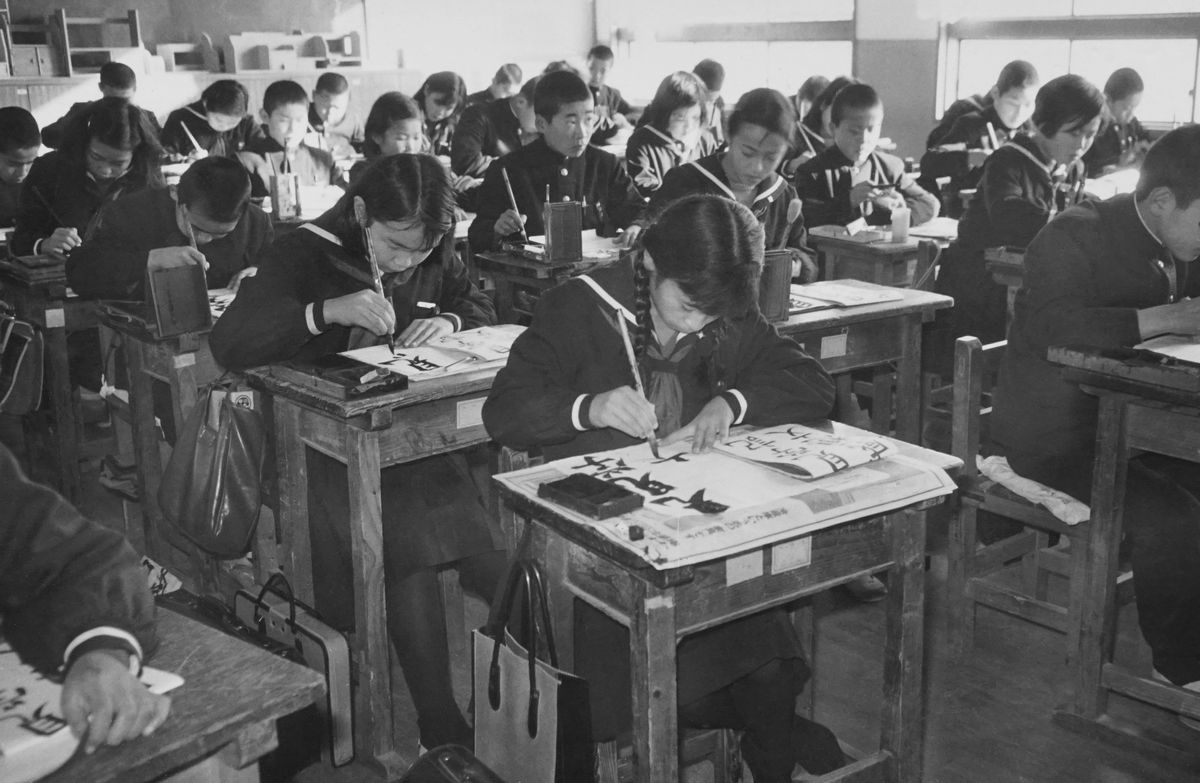
Writing practice. The traditional method emphasizes writing each character by hand — repeatedly. This builds motor memory and reinforces visual recognition. Write each new kanji 10–20 times, paying attention to stroke order. Use a grid notebook (方眼ノート) to keep characters proportional.
Strengths. Textbook approaches are thorough. They teach readings in context, show example sentences, and explain nuances that apps skip. You develop a deeper understanding of each character rather than just recognizing it.
Weaknesses. Traditional methods are slow. Learning 5–10 new kanji per day through a textbook means 2,000 kanji takes 200–400 days of uninterrupted study. Without a spaced repetition system, you'll forget characters you learned early on unless you review them regularly. The method requires strong self-discipline.
Method 4: Reading-Based Acquisition
The Tadoku (多読, "extensive reading") method takes a fundamentally different approach: learn kanji by encountering them repeatedly in real text, not by studying them in isolation.
How it works. Start with graded readers — books written specifically for Japanese learners at different levels. Level 0 books use only hiragana with pictures. Level 1 introduces simple kanji with furigana. Each level gradually increases kanji density. As you read, you encounter the same characters repeatedly in different contexts, building recognition naturally.
The logic. This mirrors how Japanese children learn kanji — through years of reading in school. The difference is that graded readers accelerate the process by controlling vocabulary and kanji introduction. You learn the most frequent characters first because they appear in every text.
Strengths. Reading-based learning builds kanji knowledge alongside vocabulary, grammar, and reading comprehension simultaneously. You learn characters in context, which makes their meanings and readings more intuitive. It's also more enjoyable than rote memorization for many learners.
Weaknesses. This method is slow at the beginning. You can't read much until you know some kanji, creating a chicken-and-egg problem. Most learners combine reading with a more direct kanji study method for the first 500–1,000 characters, then shift toward reading-based acquisition.
Building Your Kanji Study Plan
The most effective approach combines a structured kanji system with daily reading practice. Here's a plan that works for most learners:
Early foundation: build a manageable core. Start Wani Kani or RTK. Learn radicals first, then the most common kanji. Review daily — no exceptions. Begin reading Level 0–1 graded readers alongside. Daily commitment: 20–30 minutes of SRS reviews + 10 minutes of reading.
Expansion: add characters through vocabulary and reading. Continue Wani Kani or RTK at a pace of 5–10 new kanji per day. Start reading Level 2–3 graded readers and simple manga with furigana. Begin mining vocabulary from reading into Anki. Daily commitment: 30 minutes of SRS + 15 minutes of reading.
Consolidation: strengthen recall in context. You can now read most manga and simple articles with a dictionary. Shift toward more reading and less isolated kanji study. Wani Kani continues, but reading becomes the primary learning mode. Start reading NHK News Web Easy daily. Daily commitment: 30 minutes of SRS + 20 minutes of reading.
Broader literacy: continue toward your academic or professional goal. The final push to full jōyō kanji coverage. Reading becomes the dominant activity. Challenge yourself with real Japanese text — news articles, novels, blogs. You'll encounter rare kanji regularly; look them up and add interesting ones to your SRS. Daily commitment: 20 minutes of SRS + 30 minutes of reading.
Burn management. SRS burnout is real. If you feel overwhelmed, reduce your new kanji per day to 3–5 and focus on reviews. Missing one day of reviews creates a manageable backlog. Missing three days creates an avalanche. Consistency matters more than intensity.
Kanji Resources & Tools
Dictionaries:
- Jisho.org — the best free Japanese-English dictionary. Shows stroke order, example sentences, and related words for every kanji
- Takoboto (Android) — offline Japanese dictionary with kanji lookup by radical, drawing, or camera
- Kanji Garden — tracks which kanji you know and recommends study materials accordingly
Apps & platforms:
- Wani Kani — the most popular structured kanji learning platform ($9/month)
- Anki — free SRS flashcards. Use the "Core 2K/6K" deck or build your own from reading
- Kanji Study (Android) — excellent for writing practice and radical breakdown
Reading materials:
- Tadoku Free Books — hundreds of free graded readers organized by level
- NHK News Web Easy — daily news in simple Japanese with furigana
- Satori Reader — articles and stories with built-in word lookup and audio
For the broader picture — how kanji fits into your overall Japanese learning journey — see our complete guide to learning Japanese. And once you've built your kanji foundation, our JLPT N5–N3 study plan shows you how to channel that knowledge toward certification.
Ready to start climbing? Browse Japanese language programs and plan your study abroad experience in Japan, where you'll encounter kanji everywhere — from train station signs to restaurant menus to temple gates.
Frequently Asked Questions
How many Kanji do I need to know?
For basic literacy in Japanese, you need about 2,000 kanji — the jōyō kanji that cover everyday reading. With 1,000 kanji, you can read most manga and simple articles with a dictionary and handle daily life comfortably. With 500 kanji, you can recognize common signs, menus, and basic text. The JLPT does not publish a fixed official kanji list for each level; third-party estimates vary. Most learners find that 1,000 kanji is the sweet spot where reading becomes genuinely enjoyable rather than a constant dictionary lookup session.
Do I need to write Kanji by hand?
Recognition is more important than production in the digital age. Most Japanese communication happens through typing, where you select kanji from input suggestions rather than writing them from memory. Focus on reading recognition first — being able to see a kanji and know its meaning and reading. Handwriting practice is optional but aids memory through motor encoding. If you enjoy writing kanji, do it. If you find it tedious, prioritize reading and use writing only for characters you particularly struggle with.
What's the fastest way to learn Kanji?
The fastest proven approach combines a spaced repetition system (Wani Kani or Anki with a kanji deck) with daily reading practice. Functional literacy develops through vocabulary and reading as well as character recognition, so no fixed timeline applies to every learner. The bottleneck is usually consistency, not ability — learners who review daily finish much faster than those who cram on weekends. Start with the most frequent kanji first so you can begin reading real text quickly, which makes the process self-reinforcing.
How do I remember Kanji with multiple readings?
Learn readings through vocabulary, not in isolation. Don't memorize that 水 is read as sui and mizu — instead, learn 水族館 (suizokukan, "aquarium") and 水 (mizu, "water") as complete words. Each kanji's readings become natural when you encounter them in different vocabulary contexts. Wani Kani does this automatically by teaching vocabulary alongside kanji. With Anki, use sentence cards that show the kanji in context rather than isolated character cards.
Related Articles
- The Complete Guide to Learning Japanese
- Hiragana & Katakana: Your First Week of Japanese
- JLPT N5–N3 Prep: Complete Study Plan
- Learn Japanese Through Anime
- The Complete Guide to Learning Korean
- The Complete Guide to Learning Mandarin Chinese
Study with Asia Pathway
To add in-country experience to your Japanese study, review the Tokyo Summer Intensive and confirm the next available intake. Contact Asia Pathway for current dates, costs, and program fit.
For current JLPT dates, test times, and scoring rules, use the official JLPT website.
Frequently Asked Questions
More about studying in japan
Read the complete guide →